A Heritage walk through Chhattis Karkhanas | Jaipur | Dharmendar Kanwar
Anthropologist Vinod Doshi takes you on a curated walk through the old city
👤 Dharmendar Kanwar 🕐 3 min
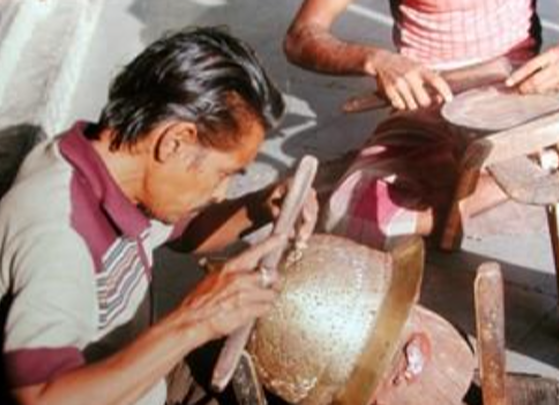
Did you know that 36 Departments or Chhattis Karkhana were established and devoted to arts and crafts way back in the 1700's? A curated walking tour of some of the surviving departments devoted to arts and crafts in the walled city with anthropologist Vinod Doshi will provide a unique experience to those interested in the heritage and culture of Jaipur.
Maharaja Sawai Jai Singh, who established the city of Jaipur in 1727 AD, envisioned Jaipur not only as the strongest power in the region but also give it an identity as a centre of outstanding art and crafts. In doing so he carried forward the legacy of his ancestor Maharaja Man Singh of Amber who had planned, and successfully, given Amber a distinctive cultural identity
Sawai Jai Singh was an important part of the best courts and had observed their intricacies; being enlightened and deeply rooted in traditions he readily absorbed what he was exposed to and only used the sophistication to further improve the various departments that would be devoted to a whole new range of crafts – some old and some new. Another important factor that led to this continuing patronage was the fact that the rulers, when not engaged in battle, were often in competition with each other to produce the finest craftsmen available.
This was the right time for setting up the 36 craft industries (karkhanas) that were established in Jaipur to provide royal patronage to these talented poets, writers, dancers, musicians, craftsmen and for promoting different kinds of crafts from textile production, woodwork, jewellery, painting to stonework.
Historic documents such as Dastur Komwar, Buddhivilas and Karkhanajat papers record the names of artisans who came from distinct areas to settle down in the newly built Jaipur city. It is clear that Sawai Jai Singh II invited local artisans from the previous capital of Amber but welcomed new techniques of arts and crafts from other areas like Gujarat, Agra, Delhi and Bengal etc. These karkhanas went on to become an example of collective and large-scale employment of artisans or crafts persons in different crafts.
The city that never sleeps meets travelers
who never settle
New York
As historian GN Bohura notes, "He adopted the system of establishing karkhanas to organise the management and upkeep of his art-treasures and day to day running of the household affairs as well as the maintenance of protocol and other paraphernalia. He fixed the number of the karkhanas at thirty-six according to his requirements………. An accurate list of all the karkhanas of those days has not been available as yet but the tradition is quite old and the epithet 'chhattis karkhanas' has been quite familiar to a Jaipurian." These diverse departments included art, jewellery, looking after the horses to royal kitchens, kite making, libraries and even collecting news or intelligence on a daily basis!
Jaipur's rich history of performing culture and craft production under the patronage of the Kachhawahas has continued for generations and this legacy continues to this day. With each passing year Jaipur's thriving craft market has several production centres that employ skilled artisans who carry the traditional crafts forward adding innovations. Today, Jaipur has over 30 different crafts forms, and at least 7 mainstream performing arts.
To book a heritage walk, contact Vinod Doshi +91 9414075175