An 18th century hidden gem | Udaipur | Delhi Fundos
Bagore Ki Haveli, is a must do for a dose of culture and heritage in Udaipur
👤 Delhi Fundos 🕐 4 min
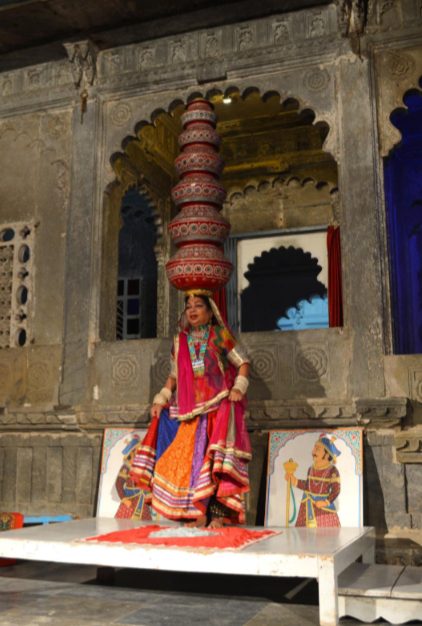
It was a surreal and unplanned introduction to Udaipur and its exquisite art, architecture, and culture. A septuagenarian showstopper was dancing on a candle-lit terrace of an old haveli under a star-studded sky, holding the audience spellbound!
Before we arrived in Udaipur, we had heard about its famous palaces, temples, lakes, and markets, but Bagore ki Haveli, the stage for this performance, was a delightful revelation. Suppose you are short on time and are on a whistle-stop tour of this beautiful city. In that case, the meticulously restored 18th century Bagore Ki Haveli, built by Amarchand Badwa, the Prime Minister of the kingdom of Mewar from 1751 to 1778, is not to be missed.
Getting to the Haveli in the Old City, tucked beside Gangaur Ghat and overlooking Lake Pichola, was an experience too. We entered the winding lanes passing bazaars and stately homes reflecting classic Mewari architecture. The period mansions or Havelis, the temples on the banks of the lakes, and the Rajasthani women wearing colorful skirts, their faces blurry under diaphanous scarves, were a romantic contrast to the scooters, bikes, and stylish cars that were trying to manoeuvre the narrow streets. The area was a heady concoction of old and new.
The city that never sleeps meets travelers
who never settle
New York
Bagore ki Haveli is an excellent example of a Rajasthan architecture school that marries Indian and Islamic styles. It boasts majestic domes, arches, courtyards, jalis or latticework windows, and jharokhas or hanging balconies for women to view the world behind curtains or purdah. The 100-plus rooms were planned given the climate and the lifestyle of its residents. We were impressed seeing the evolved craftsmanship of that era. Vibrant Mewari paintings adorned the walls. The brilliant colors brightened the otherwise sombre palette of the palace. The paintings had stood the test of time, and the subsequent restorations were sensitive to the original art.
The many museums in the Haveli were established by the Western Zonal Cultural Centre, showcasing not only Udaipur but also various ethnocultural practices of Western India. The turban museum, for instance, displays turbans from Rajasthan and those tied in Gujarat, Punjab, and Haryana.
The puppet museum exhibited Rajasthan's rich wood puppets or kathputli culture, and you can buy a few to take back home as mementos. The largest display was the haveli museum, where we traveled back in time while walking through the rooms, kitchens, and bathrooms. The ornate wood furniture and the pots and pans were a lesson in the Indian philosophy of art in life.
What blew our minds away was Dharohar, a cultural performance organized every evening at Bagore ki Haveli's terrace. It was a glimpse of the colorful and vibrant Rajasthani folk dance, music, and drama. This program was way more popular than we had imagined! Tickets were sold out the first evening, and we had to queue up early the following evening, our last opportunity to watch the performance.
When we went up to the rooftop, it was like a Rajasthani dreamland. The terrace was decorated with lamps and candles, with seating on the floor, laid with Indian-style mattresses and bolsters. We loved the Ghoomar dance, quite different from what we saw in Bhansali's Padmavat, a Bollywood film loosely based on a princess in Rajasthan. The Chari had dancers with fire pitchers balanced on their heads. In another piece, Terah Taali, music was created by the bells tied to the dancers' feet and arms. This performance gave us Goosebumps. The folk-dance drama Gavri enacted the battle sequence between Goddess Durga and the demon Mahishasur. The kathputli theatre broke the monotony of the dances and provided comic relief. If you have children on the Udaipur trip, you must take them for this program.
But what stayed with us even after we returned from our trip to Udaipur was the performance by the 70-year-old artist. She gracefully performed the routine, standing on the edges of a brass plate while balancing several pots on her head. We have seen this performance many times on television. But seeing it live by a feisty veteran was bewitching. A mesmerized audience held its breath as she pirouetted without a stumble or false step. We were saddened to know she passed away recently, but her well-trained protégés continued the show.
An unplanned experience elevates any travel from just another trip into a cherish-worthy memory. Watching traditional performances under a starlit canopy in a heritage haveli made it a story worth sharing.
For further information and booking details of Bagore ki Haveli https://udaipurtourism.co.in/bagore-ki-haveli-udaipur